
0130 min
eCommerce FundamentalsFree course with certificate
After this course you steer your shop business through its business model instead of individual fixes.
- 5 lessons
- 130 min
- 0 €
No credit card, no subscription.
JDKRUEGER Academy · Certificate
eCommerce Fundamentals
awarded to
MAX MUSTERMANN
- Map your business model in the canvas
- Cut customer groups sharply
- Assess economic viability
5 lessons · 130 min
Your result
What you will be able to do after this course
- Why business plans fail in e-commerce and what replaces them
- Map your business model in the nine fields of the online shop canvas
- Segment customer groups by the job to be done
- Choose traffic channels by customer group and buying behaviour
- Calculate costs, revenue and scalability so the levers become visible
- Judge whether your shop is economically viable
Is this for you?
Who this course is for
For you if
- You work with an online shop or its marketing and want measurable results.
- You want to work on conversion systematically instead of copying individual tactics.
Not for you if
- You are looking for a how-to for a single tool.
Curriculum
Start the course
5 lessons, 130 minutes
Every lesson has its real duration and ends with a quiz.0225 min
The Online Shop Canvas: The Nine Fields
0325 min
Customer Segments & Value Proposition
0425 min
Channels, Relationships & Sustainable Growth
0525 min
Costs, Revenue & Scalability
After all quizzes and the final exam you receive the certificate as a PDF.
Your instructor
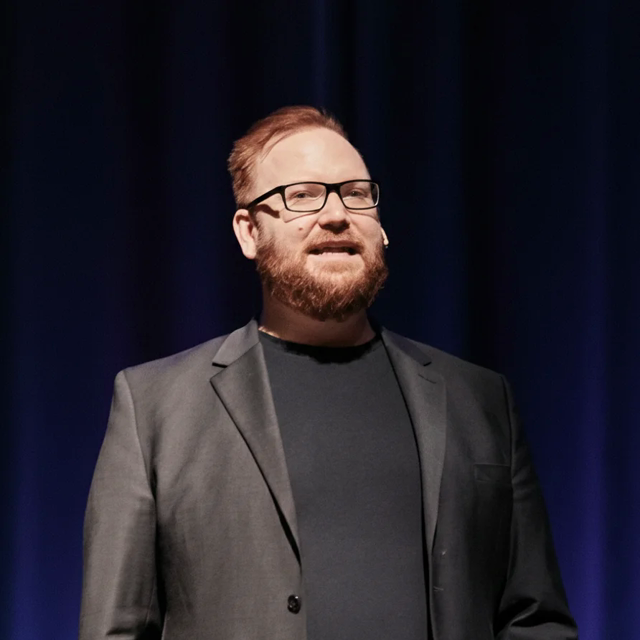
Jörg Dennis Krüger
Founder, JDKRUEGER&CO · Der Conversion Hacker®
Jörg Dennis Krüger has been optimising online shops for revenue since 2006. This course contains the approach his team tests and measures with for clients every day.
- EUR 210m+Additional revenue for clients since 2012
- since 2006in conversion optimisation
- Stevie® Goldmultiple award winner
About the course
From business model to online shop canvas. Clarity over busywork
Was der Kurs behandelt
You will learn why a clear business model is the starting point for conversion and scaling. The course explains the Business Model Canvas, walks you through the Online Shop Canvas, and shows how customer segments, value propositions, channels, and unit economics work together.
Questions
Frequently asked questions
What does the course cost?
Nothing. Course, quizzes and certificate are free.
How long does the course take?
5 lessons totalling 130 minutes. You learn at your own pace and resume where you left off.
Do I need prior knowledge?
Basic online-marketing knowledge is enough.
How do I get the certificate?
Every lesson ends with a quiz. Pass all quizzes and the final exam to receive the "eCommerce Fundamentals" certificate as a PDF.
Who is behind the Academy?
Jörg Dennis Krüger and JDKRUEGER&CO. The Academy contains the approach the team has used to optimise online shops for years.
Does the course apply to my shop system?
The principles apply to any shop system. You work with page types and metrics every shop has.
Lesson 1 takes 30 minutes.
Afterwards your business model fits on one page.