JDKRUEGER&COAcademySign inDE
Module 1 of 4 · Google Tag Manager for CRO

GTM as a CRO Accelerator

⏱ 25 min · After completing this module, you'll be able to position Google Tag Manager as a CRO accelerator - an enabler that takes tracking events, A/B testing tools, and conversion pixels live without code deployment - and manage governance questions around speed, approvals, and Consent without building containers yourself.
← Google Tag Manager for CRO GTM as a CRO Accelerator 1 / 23
continuing in 5
Start

GTM as a CRO Accelerator

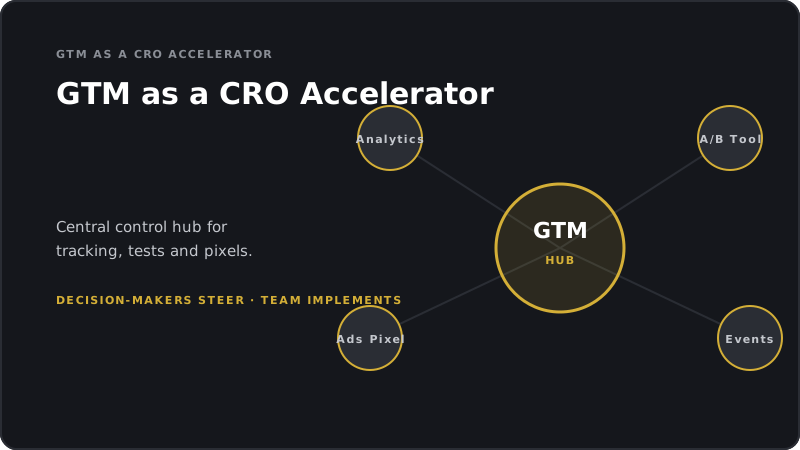
Why Google Tag Manager is the hidden lever behind fast A/B tests and clean tracking.

GTM as the Central Control Hub
Transcript of this slide

Welcome to the GTM track. For many decision-makers, Google Tag Manager is a technical tool running quietly in the background. In this module, you'll learn why GTM is one of the most important levers for fast CRO, and how to manage it strategically.

Learning objective

Learning Objective

You'll understand what GTM does for CRO decision-makers, and what it doesn't.

  • You'll see how GTM affects the speed of your tests.
  • You'll be able to define clear requirements for your team or agency.
1
Understand Your Role
2
Manage Speed
3
Define Requirements
Transcript of this slide

After this module, you'll know why GTM is more than just a container for code snippets. You'll see it as a strategic enabler for faster, cleaner tests.

Concept

What GTM Actually Does

GTM controls which scripts and code run on your website.

  • It manages tracking tools, analytics, conversion pixels, and A/B testing SDKs.
  • Without GTM, many changes would have to be made directly in the shop code. That's slower and more error-prone.
1
Website
2
GTM
3
Tools & Tests
Transcript of this slide

Think of GTM as a control center. Everything that gets measured, tested, or tracked typically runs through it. Whoever controls the control center controls the speed of the entire CRO system.

Concept

GTM = Business Value, Not Just Technology

Every change to your shop's code costs development time and testing effort.

  • GTM lets you activate many measurement and testing setups without a code deployment.
  • That shortens the time from hypothesis to live test from weeks to days.
With vs. Without GTM: Time to Test Launch
Transcript of this slide

The business value of GTM lies in speed. In CRO, every day a test goes live earlier counts. GTM reduces dependency on development resources for many standard tasks.

Example

Example: Four weeks versus four days

Without GTM: A new tracking event has to go into the shop code, get tested, and get deployed, often a four-week process.

  • With GTM: The event gets configured in Tag Manager and goes live, often in four days.
  • That speed difference directly affects how many tests you can run per year.
8 16 23 31 28 Without GTM 4 With GTM
Transcript of this slide

These timelines aren't theoretical. They reflect what happens in real shops every day. The faster you can measure, the faster you can learn, and the faster you can unlock revenue potential.

Concept

The Three CRO Tasks GTM Accelerates

Setting up tracking events: clicks, scrolls, forms, purchases.

  • Connecting A/B testing tools: GrowthBook, Optimizely, VWO, and others.
  • Managing conversion pixels and remarketing: Meta, Google Ads, Pinterest.
1
Events
2
A/B Tools
3
Pixels
Transcript of this slide

These are the three areas where GTM has the biggest impact. Everything that moves faster here accelerates the entire CRO cycle. You don't need to implement the details yourself, but you should know what's possible.

Concept

What GTM Can't Do

GTM doesn't replace a solid tracking strategy.

  • GTM doesn't fix broken shop logic or poor UX.
  • GTM doesn't run tests. It makes tests possible.
Enabler vs. Replacement
Transcript of this slide

GTM isn't a magic solution. It's an enabler. If the strategy or the underlying product problem isn't right, even the best Tag Manager setup won't deliver better results.

Scenario

Scenario: The Launch Bottleneck

A shop wants to launch an A/B test using a new testing tool.

  • The developer is booked out for two weeks because the tracking code has to go into the frontend.
  • With GTM, the integration could have been done through Tag Manager in two days.
Development Dependency vs. Tag Manager Autonomy
Transcript of this slide

This scenario comes up constantly. Shops lose valuable testing time because simple integrations are stuck in the development backlog. GTM reduces that dependency for standard, measurable tasks.

Concept

GTM Governance for Decision-Makers

Who is allowed to publish in GTM?

  • Which tags get reviewed before going live?
  • How does your team document which tags are responsible for what?
1
Permissions
2
Quality Checks
3
Documentation
Transcript of this slide

Governance sounds like bureaucracy, but it's essential for quality and security. An ungoverned GTM container quickly becomes a jumble of tags that puts performance, data privacy, and data quality at risk.

Concept

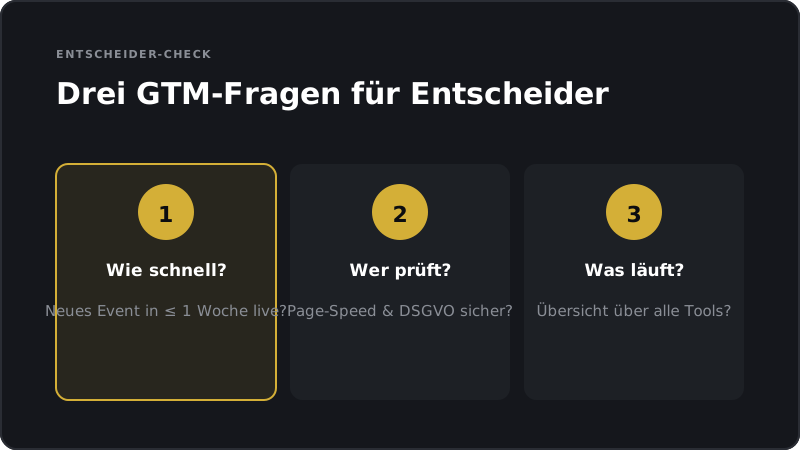
The Decision-Maker Check for GTM

Can we get a new conversion event live within one week?

  • Who checks that new tags don't compromise our page speed or GDPR setup?
  • Do we have an overview of which tools are running through GTM?
Three GTM Questions for Decision-Makers
Transcript of this slide

These three questions belong in every GTM check. They cover speed, quality, and transparency. If any one of them is hard to answer, you've found a governance lever.

Exercise

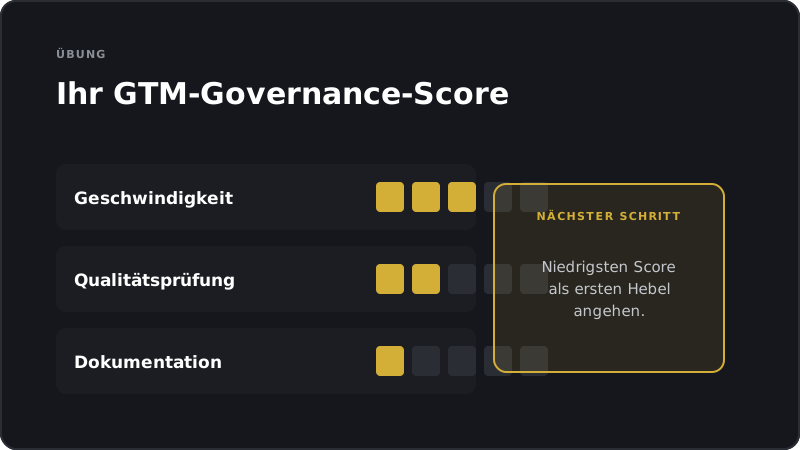
Exercise: Your GTM Governance Score

Rate your current GTM setup on a scale of one to five for speed, quality control, and documentation.

  • Write down your biggest weak point.
  • Formulate one concrete requirement for your team.
Governance Score for Your GTM Setup
Transcript of this slide

This exercise shows you where to focus first. More often than not, the problem isn't the technology. It's missing processes and unclear ownership.

Concept

GTM and Data Privacy

Every tag that loads before consent can cause GDPR issues.

  • GTM can read consent information and control tags accordingly.
  • As a decision-maker, you need to know whether your GTM setup respects consent.
Consent-Compliant Tag Control
Transcript of this slide

Data privacy isn't a legal detail. It's a competitive advantage. A GTM setup that respects consent protects you from legal warnings and builds user trust. More on this in the GDPR track.

Example

Case Study: Two GTM Maturity Levels

Shop A: Every change takes four weeks, there's no tag documentation, consent is ignored.

  • Shop B: Standard events are implemented within days, every tag is documented, consent control is active.
  • Shop B can run three times as many tests per year at lower risk.
GTM Maturity Determines Testing Speed
Transcript of this slide

The difference between Shop A and Shop B isn't budget. It's GTM maturity. That's a strategic lever that often gets overlooked, and one you as a decision-maker can actively control.

Common misconception

Myth: "GTM Is Only for Developers"

Fact: GTM is set up by developers, but driven by decision-makers.

  • The strategic questions, what gets measured, how quickly, and at what level of quality, are business questions.
  • If you leave GTM entirely to IT, you lose control over a key CRO lever.
Tech Sets It Up. Strategy Drives It.
Transcript of this slide

GTM is a classic example of how technology and strategy belong together. Technical setup belongs in the team. Strategic control belongs at the decision-makers' table.

Concept

What You Can Demand from Your Team

An overview of all active tags and their purposes.

  • A process for how new tags are reviewed and approved.
  • A metric for the average time it takes to implement new events.
1
Tag Overview
2
Approval Process
3
Implementation Time
Transcript of this slide

These three things aren't unreasonable demands. They're standard in mature CRO organizations. Ask for them, and measure whether your team delivers.

Summary

Summary

GTM is the central enabler for fast tracking and fast testing.

  • Speed, governance, and data privacy determine GTM maturity.
  • Decision-makers drive GTM through clear requirements, not by operating it themselves.
1
Enabler
2
Governance
3
Strategic Control
Transcript of this slide

The core argument: GTM saves time, which makes it economically valuable. Set it up and manage it well, and you can run more tests in less time, learning faster what actually works for your customers.

Summary

Your Key Takeaways

Check the average time it takes to implement new events in your shop.

  • Ask for a tag overview and an approval process.
  • Link GTM speed directly to your testing roadmap.
From Setup to CRO Velocity
Transcript of this slide

These three points are your homework. Put them into practice and you'll raise not just your GTM maturity, but the overall CRO velocity of your shop.

Intermediate step

What's Next

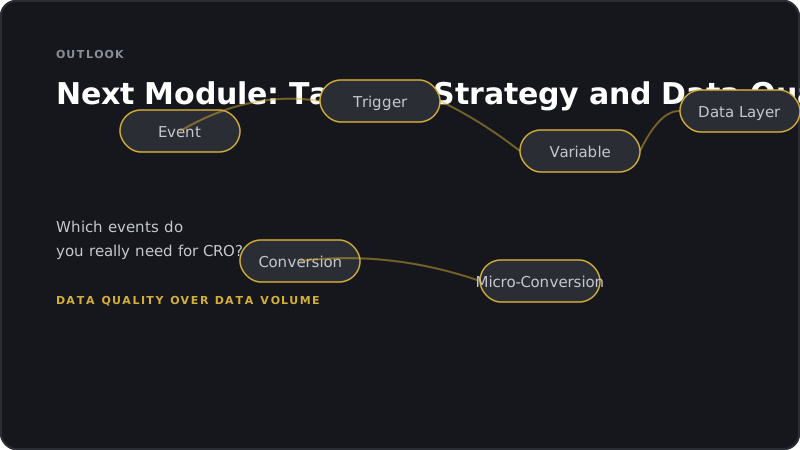
The next module covers tagging strategy: which events you need to track so your CRO decisions stand on solid ground.

Next Module: Tagging Strategy
Transcript of this slide

In the next module, we'll go deeper into which events you actually need for CRO. Not every event carries equal weight, and some can lead you to the wrong conclusions.

Quiz

Quiz

Test your knowledge.

Why is Google Tag Manager strategically relevant for CRO decision-makers?

What does event-based measurement mean in the GTM context?

Why are tags essential for data-driven decisions?

What does the maturity level of GTM operations typically indicate?

Which level of decision-making does GTM address for decision-makers?

Exercise

Exercise

Apply what you have learned right away.

  • 1
    GTM Governance Score
    worksheet · approx. 15 min
    Rate your GTM setup in the categories Speed (1 - 5), Quality Review (1 - 5), and Documentation (1 - 5). Note the lowest score and one concrete action you can take to improve it.
  • 2
    Request a Tag Overview
    checklist · approx. 25 min
    Ask your team or agency for a list of all active tags. For each tag, note: its purpose, the person responsible, and the date of the last review. Flag any tags that lack a clear purpose or owner.
Reflection

Reflection

A quick look back before you continue.

  • How long does it currently take in your shop to go from idea to live event: closer to four weeks without GTM, or four days with GTM?
  • In your shop, who checks before going live that a new tag won't compromise your page speed or your Consent setup. and is that role clearly assigned?
  • Do you have a complete overview of which tools are running through your GTM container, or would that be your first governance step?
Sources

Sources & further reading

Here you will find links and materials to explore the topic in more depth. Take your time.

Finish

Module completed

Next Module: Tagging Strategy and Data Quality

Hands-on material to take away

This module comes with two PDF downloads you can apply right away:

  • Job-Aid: The core message condensed onto one page, ideal for quick reference before decisions.
  • Worksheet: A fillable worksheet to adapt what you have learned to your shop.

Overview & learning objective

This module is aimed at shop owners.

After completing this module, you'll be able to position Google Tag Manager as a CRO accelerator - an enabler that takes tracking events, A/B testing tools, and conversion pixels live without code deployment - and manage governance questions around speed, approvals, and Consent without building containers yourself.

GTM as a CRO Accelerator