Tagging Strategy and Data Quality
Welcome to the second module of the GTM track. This module tackles a strategic question: which events do we need to track for CRO to work? Because not every event carries the same weight.
After this module, you'll know which events form the backbone of your CRO tracking. You'll be able to set clear requirements without having to build tags yourself.
A good tagging strategy is like a good dashboard: it shows what matters and filters out what doesn't. That's not a technical decision. It's a strategic one.
These five categories cover everything you need for CRO. They make up the standard catalog you should walk through with your team.
This example shows how a single missing event can obscure the entire CRO diagnosis. The checkout is a classic blind spot when individual steps aren't tracked separately.
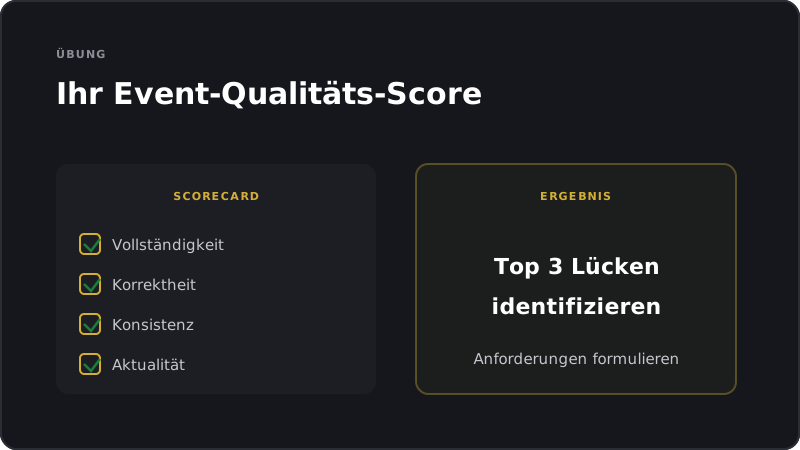
These four dimensions are your data quality check. You don't need to be a technical expert to ask these questions. They're exactly the questions a good decision-maker should be asking.
Duplicate events are a classic quality problem. They don't just distort reports, they distort A/B tests too. If your testing tool relies on GA4 data, a duplicate event can ruin an entire test.
This prioritization helps you allocate resources effectively. Revenue-relevant events come first, then hypothesis-building events, then everything else.
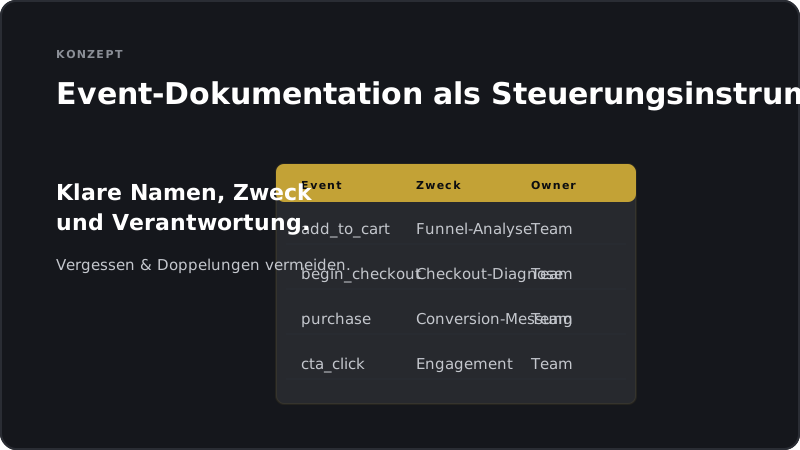
Event documentation might sound like bureaucracy, but it's essential. It's the only way to stay on top of a growing setup and guarantee data quality.
This exercise shows you where your tracking setup actually stands. There are often surprising gaps in seemingly simple events like add-to-cart or purchase.
GTM is faster than making code changes directly in your shop, and it's also safer. The ability to test tags before they go live is a real quality advantage.
This case study shows that less is often more. Focusing on the events that truly matter leads to better data quality and clearer decisions.
This myth leads to bloated containers and confusing reports. The best CRO teams often have a surprisingly small number of events, but every single one is high-quality and strategically justified.
These statements are concrete and actionable. They give your team clear goals without getting into the technical details. That's exactly the role of the decision-maker.
This point is worth repeating. Tracking quality is a competitive advantage. Better data means faster learning and more precise optimization. That's strategically relevant.
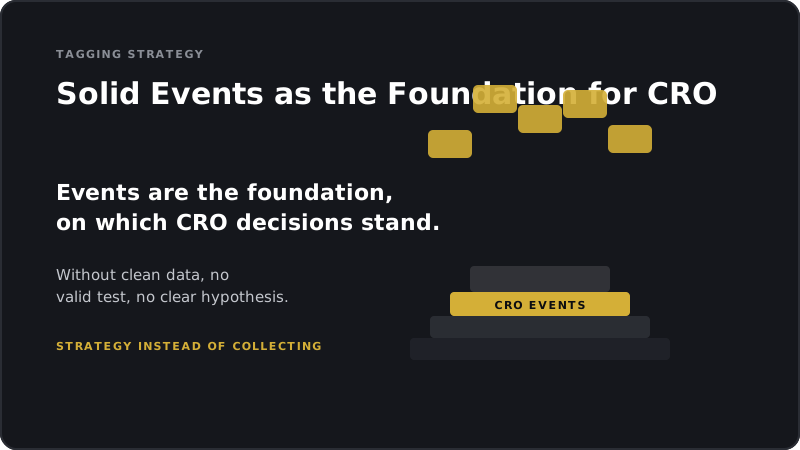
The key takeaway from this module: tagging isn't about collecting events, it's a strategy. A few high-quality events are worth more than many untested ones.
These three points are your next steps. Put them into practice and you'll improve not just your data quality, but the quality and speed of your CRO decisions as well.
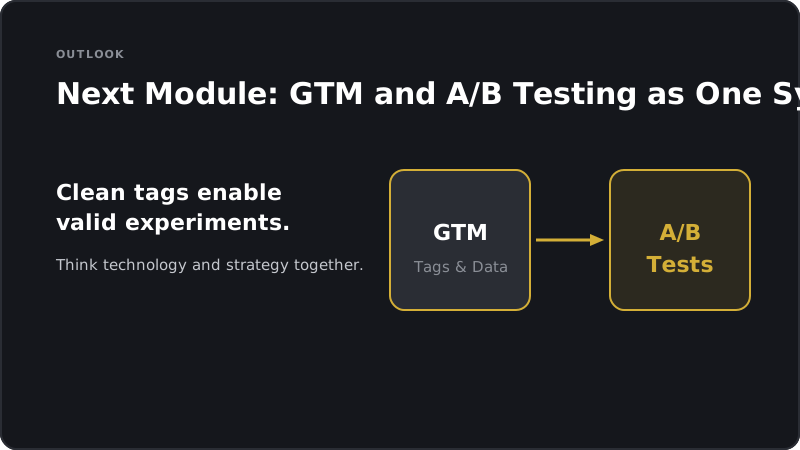
In the next module, we'll look at how GTM and your A/B testing tool work together. Because tests don't just need ideas, they need solid technical integration too.
Apply what you have learned right away.
A quick look back before you continue.
This module comes with two PDF downloads you can apply right away:
After completing this module, you'll be able to define a CRO-driven tagging strategy across the five event categories (funnel, engagement, micro-conversions, errors, external), prioritize your events by business value, and assess their data quality based on completeness, accuracy, consistency, and timeliness.